Browsing the Complexities of Next-Generation Browse Intelligence
The State of Automated Link Building in 2026
GSA Browse Engine Ranker (SER) has made it through more algorithmic updates than almost any other tool in the search engine optimization toolkit. By 2026, the software application has actually moved far beyond its origins as a simple submission engine. Success in the existing year does not originate from the variety of links sent however from the accuracy of the targets picked. High-volume, low-grade blasts that worked a years back now result in immediate domain suppression. Modern operators in the digital marketing sector have actually moved their focus towards advanced filtering layers that use expert system to veterinarian every potential URL before a single byte of data is sent out to a target server.

Online search engine now utilize innovative neural networks to recognize patterns in backlink profiles. These systems try to find unnatural clusters, topical irrelevance, and footprint-heavy footprints. To counter this, GSA SER users have integrated machine learning designs into their pre-submission workflows. This approach makes sure that every link placed adds worth to the target website's authority instead of triggering a spam handbook action. The goal is to simulate the natural choice procedure of a human editor, however at the scale and speed that automation offers.
Advanced NLP for Topical Relevance in link building
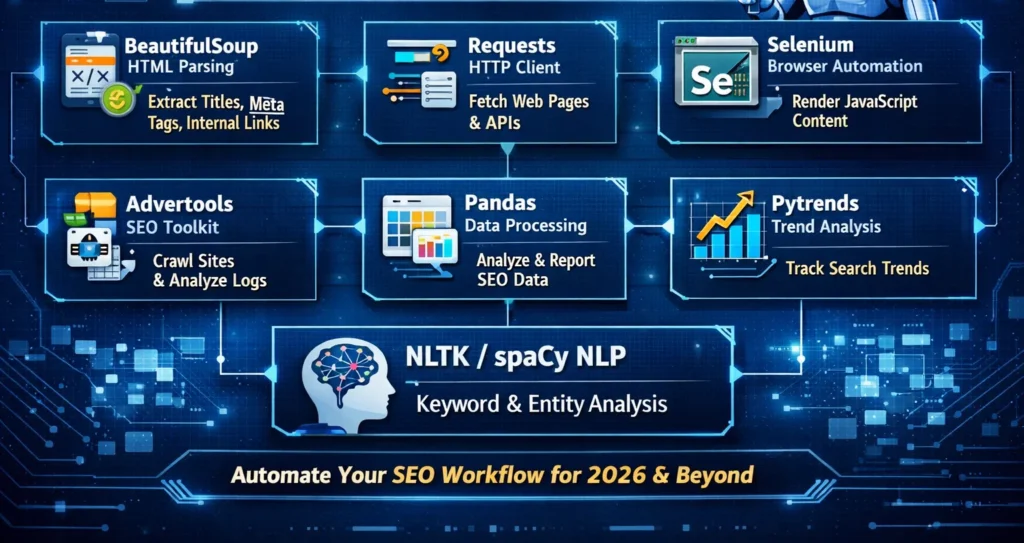
One of the most significant shifts in 2026 is using Natural Language Processing (NLP) to figure out if a target site is topically suitable with the project. In the past, users depend on basic keyword matching within the URL or the page's meta tags. This was easily deceived by parked domains or websites with mixed content. Today, advanced users link their GSA instances to regional LLM (Large Language Model) circumstances that scan the homepage and sub-pages of a target to create a "significance score."
If the software application determines a target website about gardening while the task is concentrated on monetary services, the AI filter discards the target immediately. This level of examination prevents the creation of the random, disjointed link profiles that online search engine filters easily flag. Experts who focus on GSA Search Engine Ranker Basics frequently discover that a single link from a topically appropriate source outweighs countless unassociated online forum posts or blog remarks. By training a small, specific design on a particular niche, an operator can ensure that every effective submission fits completely within the expected neighborhood of their cash site.
This semantic filtering also extends to the language utilized on the target website. In 2026, language detection is no longer simply about identifying "English" or "Spanish." It involves evaluating the dialect and the expert level of the prose. A site that uses broken English or AI-generated gibberish is flagged by the filter and blacklisted. This prevents GSA SER from publishing on "zombie" sites that exist only for the sake of real estate links, which are a primary target for online search engine purges this year.
Layout Analysis and Footprint Reduction in the local market
Online search engine algorithms have ended up being remarkably proficient at recognizing the visual and structural patterns of "link farms." Sites that share similar themes, plugin setups, or ad positionings are grouped together and cheapened. To stay ahead, GSA SER users have actually carried out visual acknowledgment filters. These filters use computer vision to "see" the target site and examine its layout before attempting to post.
If a website has a suspicious ratio of ads to content, or if its layout matches a known template used by thousands of spam sites, the filter skips it. This prevents the software application from adding a link to a site that is currently on the edge of being punished. These AI filters can detect the presence of "Submit Your Link" buttons or other obvious signs of unmoderated material locations. By avoiding these high-footprint locations, the resulting backlink profile looks a lot more like a collection of made points out instead of a list of automated submissions.
Preserving a clean profile needs consistent change of these visual thresholds. In 2026, GSA Search Engine Ranker Software Technology Overview has become a top technique for those who need to preserve long-lasting rankings without constant domain turnover. When the filtering engine discovers a pattern that looks too "SEO-optimized," it advises GSA SER to carry on to the next prospect. This selective nature is what keeps automatic tools practical in a period of hyper-intelligent search algorithms.
Incorporating Real-Time Toxicity Scoring
Toxicity is a metric that has actually developed substantially. It no longer simply refers to the existence of adult content or malware. In 2026, a "harmful" website is one that has a high rate of outbound links compared to its incoming authority, or a site that has actually just recently lost 90% of its organic traffic. GSA SER users now utilize API hooks to pull real-time traffic information and link velocity stats for every single possible target. If a target website reveals signs of a current algorithmic penalty, the filter obstructs it from the submission line.
This real-time data enables a "vibrant blacklist" that updates itself per hour. If a particular CMS (Content Management System) or a specific specific niche of websites starts getting hit by a brand-new Google upgrade, the AI filter notices the trend and instantly moves the GSA task far from those targets. This proactive defense is essential since, in 2026, a link from a punished website can pass "negative juice" much faster than in previous years. The filter functions as a shield, ensuring the software just connects with healthy, growing domains.
The cost of these API calls has dropped considerably as more suppliers offer specialized "lite" variations of their data specifically for high-volume tools. Some operators even run their own crawlers to develop exclusive databases of "safe" zones. This internal data, combined with AI sentiment analysis, makes sure that the context of the link is always favorable. A link placed in an unfavorable evaluation or a conversation about scams might damage a brand's credibility, even if the website itself is reliable. The AI filter checks out the surrounding text to guarantee the sentiment is neutral or positive before confirming the submission.
Enhancing Resource Intake and Speed
The biggest obstacle with adding AI layers to GSA SER is the effect on efficiency. AI processing requires time and computing power, which opposes the traditional "speed is king" mentality of automated SEO. 2026 has actually seen the increase of "asynchronous filtering." Instead of the software application stopping to await a filter outcome, it uses a multi-threaded technique where a background procedure pre-vets thousands of URLs and moves them into a "verified-clean" hopper for the primary submission engine.
Many practitioners in the tech industry usage localized, quantized versions of popular designs like Llama or Mistral to keep costs down. These models are small adequate to work on a standard VPS however effective adequate to deal with the category tasks required for link filtering. By running the AI locally, the user avoids the latency and expenses related to cloud-based APIs. This makes it possible to filter 10s of countless URLs daily while maintaining a high standard of quality.
Filtering by proxy health is another important aspect. In 2026, search engines can often identify a bot by the quality of the IP address it uses. Sophisticated filters now inspect the track record of the proxy being used for each particular target. If a proxy has actually been used too many times on a particular domain, the filter turns it or stops briefly the submission. This prevents "IP-burn," where a set of proxies spoils due to the fact that they have actually been flagged for bot-like behavior across a specific network of sites.
The Future-Proofing of Automated Strategy
The course forward for automated home builders is one of constant refinement. As online search engine deploy more complex models to find adjustment, the tools used for that adjustment must become similarly intricate. GSA SER stays an effective engine, but its effectiveness in 2026 is completely depending on the quality of the data it is fed. The integration of AI filtering is not just an upgrade; it is an essential shift in how automation is handled.
Instead of trying to conceal the fact that a tool is being used, the focus has moved to making the output of the tool identical from human activity. This indicates using AI to differ the anchor text based upon the surrounding material, choosing the correct time of day to post based upon the target site's timezone, and even mimicing human mouse movements and click-throughs throughout the submission procedure. The filtering phase is where all of this information is manufactured to make a final "go/no-go" decision.
In the coming years, we can anticipate these filters to end up being a lot more self-governing, perhaps even adjusting their own criteria based on the ranking results they see in the SERPs. In the meantime, the combination of GSA SER's raw submission power and a custom-tuned AI filtering layer provides an one-upmanship that is difficult for manual link home builders to match in regards to scale or for traditional "spammers" to match in regards to quality. Success in the digital marketing world requires a balance of both, ensuring that every link serves a purpose and endures the analysis of the world's most sophisticated search algorithms.